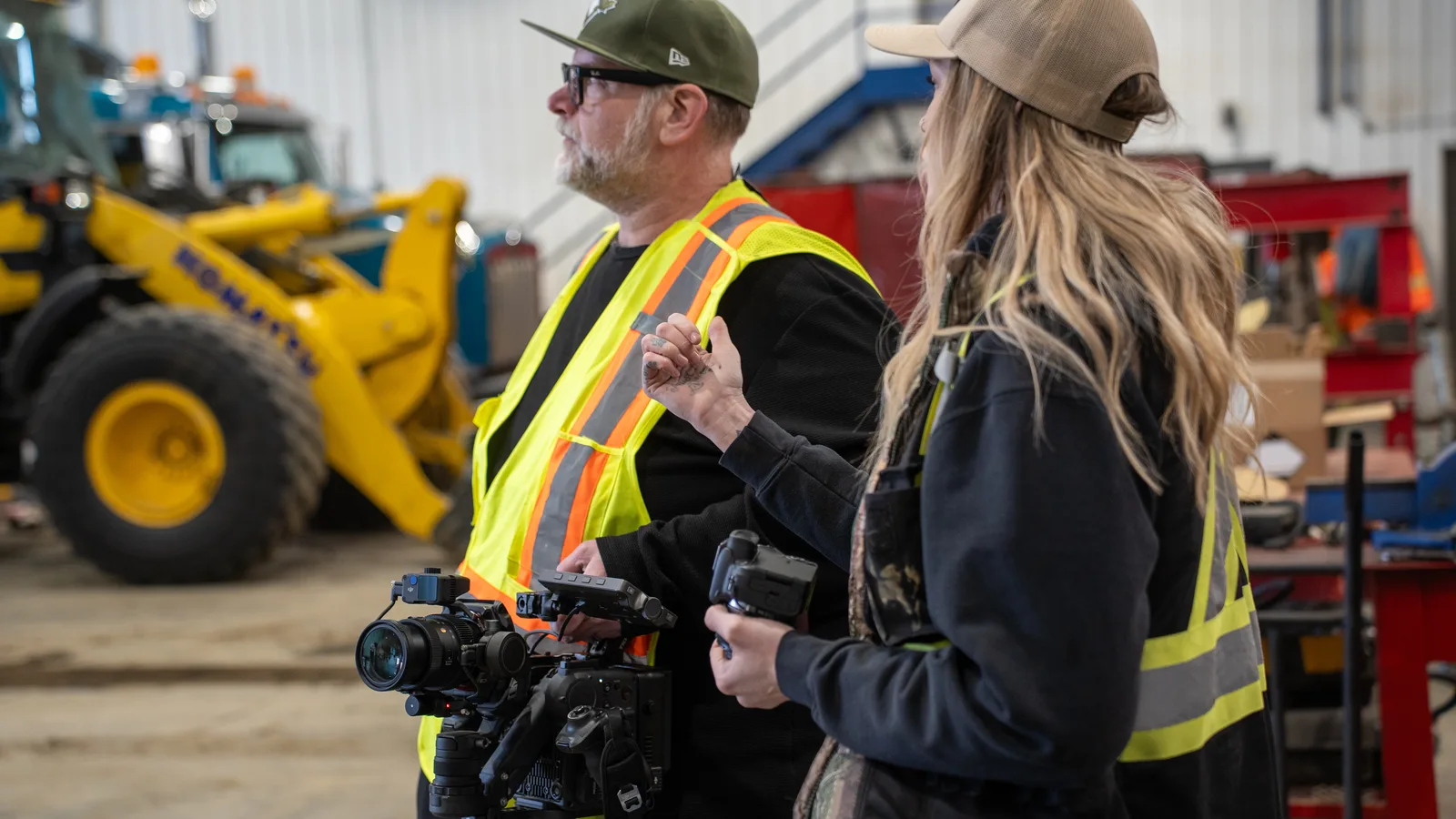
The Project That Needs a Three-Minute Story
Picture a developer trying to win approval for a large solar project. The technical report runs to twenty pages. The stakeholders include landowners, neighbours, municipal staff, regulators, Indigenous communities and the media, and none of them will read it.
The answer isn’t a better report. It’s a short documentary that shows real people, real impacts and real outcomes. That’s how energy companies turn project communication from an obstacle into an advantage.
The Energy Sector’s Communication Problem
You’re explaining projects that cost hundreds of millions, involve complex technology and affect several communities, while competing with:
- Information overload. Stakeholders already receive dozens of reports.
- Technical complexity. Energy systems are genuinely hard to explain.
- Regulatory scrutiny. Every claim has to be substantiated.
- Public skepticism. Communities have heard promises before.
- Short attention spans. Decision-makers won’t read a 50-page brief.
Traditional approaches fail because they treat complex projects like simple products. You can’t sell a solar farm the way you sell a smartphone.
Three Habits of Companies That Get It Right
Modular production. One well-made 90-second brand film, cut into a month of 20 to 30 second social clips. You pay for the shoot once and publish for weeks.
Consistency over perfection. A sustainable cadence, like a video a month and a few posts a week, builds more authority than one showpiece followed by silence. Audiences trust companies they hear from regularly.
Safety-first storytelling. In an industry where trust is the product, showing your safety culture and craft on camera isn’t a nice-to-have. It’s the whole argument.
Why Video Gets Through
It makes complexity visual. A solar farm becomes tangible when you see workers installing panels, a drone capturing the scale of the site and local families talking about their power bills. A time-lapse of a site before, during and after construction can explain a timeline better than a dozen presentations.
It speaks to several stakeholders at once. One film can have multiple entry points. Executives look for risk and return, communities for local benefit and stewardship, regulators for compliance and safety, and media for visuals they can use.
It builds trust by showing real people. Energy projects live in communities for decades. People want to see the real faces, real processes and real commitments behind the promises. Employee spotlights of local tradespeople talking about their work are a good start.
It can carry the compliance work. Captions meet accessibility requirements, data visualizations support environmental claims, expert interviews add credibility, and on-screen methodology backs up technical statements.
A Four-Step Approach
1. Lead with local impact. Start with people, not technology: “Meet the family whose farm now hosts the solar array.” “How this wind project supports local jobs.” The environmental impact in terms the community understands.
2. Explain complex systems simply. Time-lapse construction to show progress, animated diagrams for energy flows, and side-by-side comparisons, such as before and after or traditional versus renewable.
3. Address concerns head-on. Answer the questions people actually ask. “Will it affect property values?” Show the studies and the data. “What about wildlife?” Show the monitoring footage and the experts. “What happens when it’s decommissioned?” Explain the end-of-life plan and the financial guarantees. “How do I know it will deliver?” Show the performance guarantees and monitoring.
4. Provide proof, not promises. Energy decisions are enormous commitments. Show what you’ve delivered: performance data from existing projects, third-party certifications and approvals, and long-term monitoring and reporting.
Why Southern Alberta Suits It
You have real projects with real results to show. The region’s manufacturers provide “local supply chain” stories that matter to communities and procurement teams. Indigenous communities offer the chance for co-created narratives that show genuine partnership and shared benefit. And Alberta’s regulatory frameworks for environmental claims and safety communication are exactly the standard sophisticated stakeholders expect.
How to Tell It’s Working
- Stakeholders arrive at meetings already understanding the basics, so you spend less time on repeated briefings.
- Messaging is consistent across teams because everyone shares the same content.
- You spend less on print and mail, and digital distribution reaches people directly.
- Communities respond to the project benefits they’ve seen firsthand.
Mistakes to Avoid
- Leading with technology instead of people. Wrong: “Our proprietary inverters deliver 98.7% efficiency…” Right: “This technology means Maria’s family saves on electricity bills.”
- Over-promising on environmental benefits. Make specific, measurable claims and disclose the methodology.
- Ignoring the multi-stakeholder reality. One video can’t serve everyone. Make several, tailored to different needs.
- Treating video as a one-time project. “We made a video for the permit application” isn’t a communications strategy.
Ready to Tell Your Project’s Story?
Energy projects succeed or fail on stakeholder buy-in. When one community’s opposition can delay a project by years, communicating clearly and honestly is business critical.
Our documentary approach suits this work. We start with discovery, find the people behind the project, show the technology in human terms, and build the film around what each stakeholder needs to see. The energy transition needs great stories. Let’s tell yours.
Explore our corporate video production services or book a free consultation →